When a roof fails unexpectedly, during a storm, under heavy rain, or in the middle of winter, the consequences can be severe. From internal water damage to operational downtime for businesses, emergency roofing issues demand immediate attention from experts who understand both safety and urgency.
As one of the leading emergency roofers in Glasgow and a trusted industrial roofer serving almost all of the UK. We at Balmore Specialist have decades of experience responding to urgent roofing crises for homes, commercial properties, industrial sites and hard-to-reach structures.
This guide walks you through everything you need to know: how to identify an emergency, what to do first, how roof leak detection works, what to expect from emergency roof repair services, and how to prevent future failures. It is designed to help property owners move confidently from panic, clarity, action.

What Counts as an Emergency Roof Repair?
Not all roof issues require an emergency call-out, but many do. A roofing issue becomes an emergency when it poses immediate structural, operational or safety risks.
Common roofing emergencies include:
- Roof leaks in heavy rain
- Sudden storm damage
- Collapsed or sagging roof sections
- Torn or blown-off roofing materials
- Water ingress affecting electrics
- Chimney or flashing failures
- Winter roof damage due to ice or freeze-thaw cycles
- Flat roof membrane rupture or failed coatings
If the issue threatens to cause immediate further damage, you need professional emergency roofers right away.
And if you’re searching for a roof company close to me that can mobilise quickly. We offer 24/7 emergency response.
First Steps: What to Do Before Emergency Roofers Arrive
When an emergency happens, taking the right actions in the first few minutes can prevent hundreds or even thousands of pounds in additional damage.
Contain internal water:
- Move furniture, electronics and valuables.
- Place buckets under active drips.
- Lay towels or tarps to protect flooring.
Relieve ceiling pressure:
- If a ceiling bubble forms, gently puncture it at the lowest point using a screwdriver to allow water to drain safely.
- This prevents uncontrolled collapse.
Shut off affected electrics:
- This is crucial for safety, especially in industrial and commercial buildings.
Do NOT climb onto the roof
- Wet roofs, especially during storms or winter freezes, are extremely dangerous.
- Let trained emergency roofers and rope access specialists handle high-risk access.
If urgent access is required for tall or complex structures, our rope access Scotland teams, especially our trained industrial rope access technicians in Glasgow, provide the safest method.
Emergency Roof Leak Detection: How Professionals Find the Source
One of the most essential steps in urgent roofing work is accurate roof leak detection. Many leaks don’t appear directly below their source, especially in older, industrial or multi-layer roofs.
Balmore Specialist uses advanced methods including:
- Moisture tracing
- Thermal imaging (where appropriate)
- Drone surveys
- Internal/external inspection paths
- Rope access inspections for complex roofs
Leak tracing is especially vital for:
- Industrial buildings with large roof spans
- Commercial roof systems with layered membranes
- Flat roofs where water can migrate long distances
Fast and accurate leak detection ensures the repair of roof leakage is done correctly the first time, avoiding recurring call-outs and ongoing damage.
The Most Common Causes of Emergency Roof Problems
Storm Damage:
- Strong winds can lift tiles, rip flat-roof membranes, damage flashing or collapse chimney structures.
Heavy Rain:
- Unmaintained roofs are especially vulnerable.
- Blocked gutters and damaged flashing result in roof leaks in heavy rain that escalate within minutes.
Snow, Ice & Winter Weather:
Winter roof repair calls often spike due to:
- Freeze-thaw cracking
- Snow load stress
- Ice dams
- Slipped tiles from expansion/contraction
- Membrane splitting
- Failed seals
Which is why roof leak repair in winter requires specialised materials and techniques that work in low temperatures.
Ageing Roof Systems:
- Old tiles, brittle flashings, worn membranes, and weakened structures are more likely to fail during bad weather.
Poor Installation or Previous Repairs:
- Quick fixes, cheap materials or unqualified labour lead to vulnerabilities that become emergencies later.
Emergency Roof Repair Services You May Need
Depending on the severity, emergency repairs can include:
- Tarping & Temporary Weatherproofing: To stop water ingress immediately.
- Tile / Slate Replacement: For pitched roofs, missing or broken tiles/slates must be replaced quickly.
- Flashing Repair: Around chimneys, dormers, vents, rooflight edges.
- Gutter Repairs: Especially common during storms, gutter repairs prevent water backing up into rooflines.
- Flat Roof Emergency Repairs: Essential for commercial properties.

Why Rope Access Matters for Emergency Roofing?
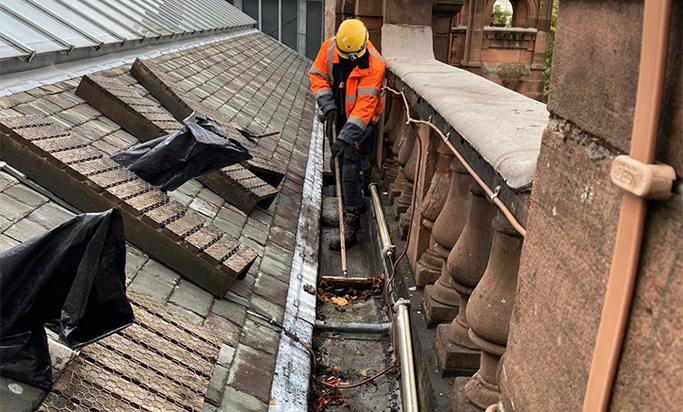
One of Balmore Specialist’s core advantages is our ability to conduct emergency roof repairs on:
- High-rise buildings
- Complex roofs
- Industrial structures
- Confined spaces
- Historic properties
Using:
This allows:
- Faster emergency response
- Less scaffolding cost
- Safer access in storms or winter
- Minimal disruption to businesses
This is especially useful for:
- factories
- warehouses
- office buildings
- multi-level roofs
- difficult-to-reach chimneys or gutters
When an emergency strikes, speed and safety matter, and rope access delivers both.
When You Should Call an Emergency Roofer Immediately?
Call emergency roofer immediately if you observe:
- Water dripping from ceilings or walls
- Sudden interior flooding
- Multiple leaks forming at once
- Roof movement or sagging
- Loose materials visible from the ground
- Holes created by wind-blown debris
- Chimney instability
- Structural cracking
- Water near electrical systems
- Severe flat roof ponding leading to failure
These situations worsen rapidly, every minute matters.
After the Emergency: Preventing Future Roof Failures
Once the immediate danger is resolved, long-term prevention protects your property and budget.
Schedule a full post-repair inspection:
- To identify underlying weaknesses.
Invest in planned preventative maintenance:
- (PPM is essential for commercial roofs.)
- Poor drainage is one of the top causes of winter roofing emergencies.
Consider a flat roof recoat:
- For ageing flat roofs, a recoat extends life and prevents future emergencies.
Book annual roof inspections:
- Especially in the UK’s unpredictable weather.
Conclusion: Act Fast, Stay Safe, Protect Your Property
A roofing emergency is stressful, but with a trusted partner, it doesn’t need to become a disaster.
Fast action, professional roof leak detection, and expert emergency repair services ensure your property stays safe, functional and secure.
Whether you’re facing roof leaks in heavy rain, winter roof damage or sudden industrial roof failure, we are ready to help.
Contact us now for emergency roof repairs, and protect your home or business before the damage spreads.









Quotes & Enquiries
At Balmore, we offer the expertise of four decades in roofing, building maintenance, rope access, steeplejack work and lightning protection services. Our business grown through our desire to constantly exceed our clients expectations and offer a service that is far superior to our competitors.
Please fill in the form outlining your requirements and our contract team will be able to provide you with a bespoke quotation for your roofing or building maintenance needs.